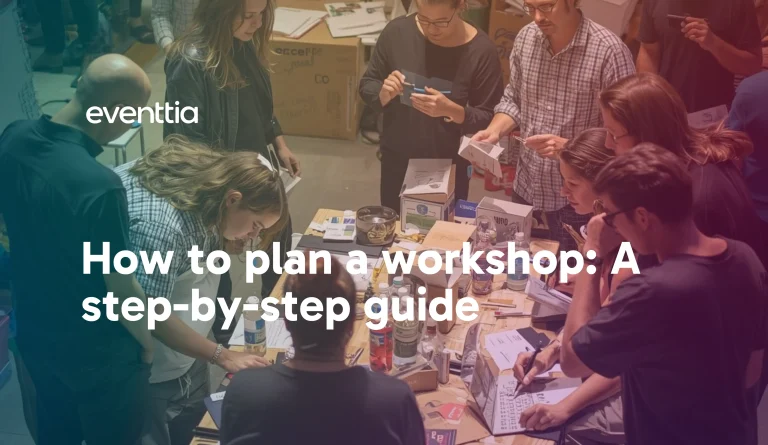
Workshops have become one of the most effective ways for organizations to share knowledge, build skills, and create meaningful connections with employees, customers, or communities. Unlike traditional meetings or presentations, workshops are designed to be interactive, and when planned well, they lead to real learning and measurable impact.
However, planning a successful workshop requires more than choosing a topic and booking a room or virtual platform. In this guide, we’ll walk you through how to plan a workshop step by step.
What is a workshop, exactly?
A workshop is an interactive, hands-on learning experience designed to help participants develop skills, solve problems, or collaborate toward a shared outcome. Unlike meetings, which are typically focused on updates, decision-making, or alignment, workshops are action-oriented and participatory.
Common types of workshops
Workshops can take many forms depending on their objectives and audience. Some of the most common types include:
- Training workshops, which focus on building specific skills or knowledge, such as software training, leadership development, or compliance education.
- Strategy workshops, designed to align teams, solve complex problems, or plan initiatives. These often involve facilitated discussions, frameworks, and collaborative decision-making.
- Creative workshops, which encourage ideation and innovation through brainstorming sessions, design thinking exercises, or collaborative prototyping.
- Onboarding workshops, used to introduce new employees, partners, or customers to processes, tools, and company culture in a more engaging way than traditional orientations.
Each type requires a slightly different approach to content, facilitation, and structure, but all rely on active participation to be effective.
Business benefits of well-planned workshops
When thoughtfully planned and executed, workshops offer significant business value. They help organizations accelerate learning by allowing participants to apply concepts in real time, which improves retention and understanding. Workshops also foster collaboration by bringing people together to share perspectives, align on goals, and work through challenges collectively.
From a strategic standpoint, workshops can drive better decision-making, spark innovation, and strengthen relationships with employees, customers, or stakeholders. They also provide valuable insights through participant feedback, engagement data, and outcomes that can inform future initiatives.
Step 1: Define Your Workshop Goals and Outcomes
Every successful workshop starts with clarity. Before you think about speakers, activities, or logistics, you need to be clear on why the workshop exists and what success looks like.
Clarifying the purpose of your workshop
Begin by clearly articulating the primary purpose of your workshop. Maybe you are aiming to:
- Educate participants on a new topic
- Build practical skills
- Solve a specific problem
- Align a group around a shared strategy
A strong purpose statement should answer what participants will do differently as a result of attending.
Setting measurable objectives and KPIs
Once the purpose is clear, translate it into specific, measurable objectives. These objectives define what success looks like and give you a way to evaluate whether the workshop achieved its intended outcomes.
Examples of measurable workshop objectives might include:
- Participants demonstrate proficiency in a new skill by completing a practical exercise.
- Teams produce a documented action plan or set of recommendations.
- Attendees report increased confidence or understanding based on post-workshop surveys.
Your KPIs might be:
- Attendance and participation rates
- Engagement levels during sessions
- Completion of activities
- Feedback scores
Tracking these metrics helps you assess the effectiveness of your workshop and provides data-driven insights to improve future events.
Aligning workshop goals with business or community needs
For a workshop to have lasting impact, its goals should align with broader business or community objectives. This ensures the time, budget, and resources invested are directly supporting strategic priorities like employee development, customer education, innovation, or community engagement.
Think about how your workshop fits into the bigger picture. Does it support a product launch, change initiative, or professional development program? Does it address a specific challenge your audience is facing? When workshop goals are aligned with real needs, participants are more likely to be engaged, and stakeholders are more likely to see tangible value.
Step 2: Identify your target audience
A workshop is only effective if it’s designed for the right people. Understanding who your participants are and what they need allows you to shape the content, format, and level of interaction in a way that feels relevant and valuable.
Understanding participant needs and skill levels
Start by identifying who the workshop is for and what they already know. Consider participants’ roles, experience levels, and familiarity with the topic. Are they beginners looking for foundational knowledge, or experienced professionals seeking advanced insights and practical application?
Gathering this information in advance through registration forms, surveys, or past event data helps you design content that meets participants where they are. This clarity also informs the types of activities you include, from guided exercises to open-ended discussions.
Determining ideal group size
Group size has a significant impact on the workshop experience. Smaller groups typically allow for deeper interaction, more personalized feedback, and stronger collaboration, making them ideal for hands-on training or problem-solving sessions. Larger groups may require more structured facilitation, breakout sessions, or digital engagement tools to ensure everyone stays involved.
Tailoring content for internal vs. external audiences
Internal workshops like employee training or team alignment sessions can assume shared context, internal terminology, and organizational goals. These workshops often focus on implementation, collaboration, and long-term impact within the organization.
For external workshops like customer education or community events, content should be more contextual, accessible, and value-driven, with clear explanations and real-world examples. Building trust and credibility is especially important, as participants may be engaging with your brand for the first time.
Step 3: Choose the right workshop format
Once you know your goals and audience, the next step is deciding how your workshop will be delivered. The format you choose affects everything from participant engagement and logistics to technology needs and overall outcomes.
In-person vs. virtual vs. hybrid workshops
In-person workshops are ideal for hands-on activities, networking, and building strong interpersonal connections. They work especially well for collaborative problem-solving, creative sessions, and training that benefits from physical interaction or real-time feedback.
Virtual workshops offer greater flexibility and reach, making it easier to bring together participants from different locations. They often require lower logistical costs but demand more intentional engagement strategies to keep participants focused. Tools like live polls, chat, Q&A, and breakout rooms are essential for maintaining interaction in a virtual setting.
Hybrid workshops combine elements of both, allowing some participants to attend in person while others join remotely. This format requires careful planning to ensure remote attendees are just as engaged as those on site. Reliable technology and well-defined interaction points are key to making hybrid workshops successful.
Half-day, full-day, or multi-session workshops
The length of your workshop should reflect the complexity of your topic and the depth of interaction required. Half-day workshops are well-suited for focused training, introductions to new concepts, or targeted problem-solving sessions.
Full-day workshops allow for deeper exploration, more hands-on activities, and extended group discussions. However, they require careful agenda planning, regular breaks, and varied session formats to maintain energy and attention.
Multi-session workshops, spread over several days or weeks, are ideal for complex topics or skill development that benefits from reflection and practice between sessions. This format supports long-term learning and engagement but requires effort to keep participants committed.
Interactive formats that drive engagement
Regardless of delivery or duration, engagement should be at the core of your workshop format. Interactive elements help participants stay involved and apply what they’re learning in real time. Common formats include:
- Breakout group discussions
- Hands-on exercises
- Role-playing scenarios
- Collaborative problem-solving activities
For virtual and hybrid workshops, digital engagement tools like live polling, shared whiteboards, and moderated Q&A play a critical role. In in-person settings, physical room layout, group seating, and facilitator-led activities can encourage participation and collaboration.
Step 4: Build a strong workshop agenda
A well-designed agenda turns your goals into a clear, structured experience and helps facilitators and participants understand how the session will flow. It keeps the workshop focused, maintains energy, and ensures there is enough time for learning, interaction, and reflection.
Structuring time for learning, practice, and discussion
While participants need time to absorb new information, they also need opportunities to apply what they’ve learned and discuss insights with others. Structuring your agenda to include learning segments, hands-on practice, and group discussion helps reinforce concepts and encourages deeper understanding.
A common approach is to introduce a concept, follow it with an activity or exercise, and then allow time for reflection or discussion. This rhythm keeps participants engaged and prevents the workshop from feeling too passive or lecture-heavy.
Balancing content delivery and hands-on activities
One of the most common workshop planning mistakes is trying to cover too much content. Rather than packing the event agenda with information, focus on what participants need to do during the workshop. Aim for a balance where content delivery provides just enough context to support practical application through hands-on activities.
Planning breaks and energy management
Workshops are mentally demanding, and participant energy naturally fluctuates over time. Building in regular breaks is essential for maintaining focus and productivity, especially in full-day or virtual workshops. Alternating between listening, discussing, and doing also helps prevent fatigue and keeps momentum high throughout the workshop.
Creating clear session objectives
Every session or agenda item should have a clear objective that ties back to the overall workshop goals. These session objectives help facilitators stay on track and give participants a clear sense of what they’re expected to learn or accomplish.
Step 5: Select speakers, facilitators, and contributors
Selecting and preparing the right individuals ensures your workshop is engaging, productive, and aligned with its goals.
Choosing the right workshop facilitator
A workshop facilitator is more than a subject-matter expert; they are responsible for guiding the experience. The right facilitator knows how to manage group dynamics, encourage participation, and adapt in real time based on audience needs. They should be comfortable asking questions, moderating discussions, and keeping energy levels high.
For internal workshops, your facilitator may be a team leader or trainer who understands the organizational context. For external workshops, an experienced facilitator or industry expert can help establish credibility and create an engaging environment for participants.
Defining roles and responsibilities
Beyond the main facilitator, you may have speakers, panelists, co-facilitators, moderators, or technical support staff. Each role should be clearly defined so everyone knows what they’re responsible for before, during, and after the workshop.
For example, one person may lead the main discussion, while another manages breakout sessions or handles audience questions. In virtual or hybrid workshops, assigning someone to monitor chat, polls, and technical issues is especially important.
Preparing speakers for interactive sessions
Workshops require a different approach than traditional presentations, and speakers should be prepared accordingly. Instead of long lectures, encourage speakers to design their sessions around interactive exercises, discussion prompts, or real-world examples that participants can work through together.
Providing speakers with a clear brief, including workshop goals, audience profile, timing, and engagement expectations, helps ensure alignment. Rehearsals or prep sessions can also be valuable, especially for virtual or hybrid formats, allowing speakers to test technology and refine their interactive elements.
Step 6: Plan logistics and technology
Strong logistics and reliable technology are essential to delivering a smooth workshop experience. While participants may not notice when everything works perfectly, they will immediately feel the impact of poor setup, unclear processes, or technical issues.
Venue selection and room setup
For in-person workshops, the venue should support both comfort and collaboration. Consider factors like location, capacity, layout flexibility, lighting, acoustics, and access to power and Wi-Fi. Workshops benefit from rooms that allow for movement, small-group work, and easy interaction rather than fixed, lecture-style seating.
Room setup should align with your agenda and activities. Round tables, U-shaped seating, or classroom-style layouts with space for group work can all work depending on your goals. Don’t forget practical details like signage, presentation equipment, whiteboards or flip charts, and registration areas.
Virtual platforms and tools for online workshops
For virtual workshops, choosing the right platform is critical. Look for tools that support live interaction, such as breakout rooms, chat, Q&A, polling, and screen sharing. Reliability and ease of use should be top priorities, and facilitators should be familiar with the tech well before the workshop begins.
Registration, check-in, and attendee management
A smooth registration and check-in process sets the tone for your workshop. Clear registration forms help you collect essential information, understand participant profiles, and communicate important details in advance. Automated confirmations, reminders, and calendar invites reduce no-shows and ensure participants arrive prepared.
On the day of the workshop, efficient check-in helps sessions start on time. Centralized attendee management also allows you to track attendance, engagement, and post-event follow-up, making it easier to measure success and improve future workshops.
Accessibility and inclusivity considerations
Accessibility should be a core part of your logistics planning, not an afterthought. For in-person workshops, this includes wheelchair access, clear signage, accessible restrooms, and seating options. For virtual workshops, consider closed captions, readable fonts, and platforms that support assistive technologies. Inclusivity means being mindful of time zones, language, and cultural differences, especially for global audiences.
Step 7: Promote your workshop effectively
Even the best-planned workshop won’t succeed if the right people don’t know about it. A clear message, the right channels, and consistent communication all work together to drive participation and set expectations before the event begins.
Drafting a compelling workshop description
Your workshop description is often the first touchpoint for potential participants, so it should clearly communicate value. Focus on what attendees will learn, do, or achieve rather than simply listing topics.
Highlight key takeaways, who the workshop is for, and why it’s worth their time. Keep the language clear and outcome-oriented, and include practical details such as date, duration, format, and level of experience required.
Choosing the right promotion channels
The most effective event promotion channels depend on your audience. For internal workshops, email, internal communication platforms, and manager-led promotion are often the most reliable. For external workshops, consider a mix of email marketing, social media, your website, partner networks, and event listings. Rather than promoting everywhere at once, prioritize channels where your audience is already active.
Managing registrations and reminders
Once promotion begins, managing registrations efficiently is key. A simple, user-friendly registration process encourages sign-ups and reduces friction. Collect only the information you need while allowing participants to easily update their details if needed.
Sending confirmation emails, calendar invites, and timely reminders helps participants stay informed and reduces no-shows. These touchpoints can also be used to share pre-workshop materials or instructions, increasing engagement before the session even begins.
Using event technology to streamline promotion
Event technology can significantly simplify and enhance your promotional efforts. Centralized platforms allow you to manage registration pages, automate communications, track sign-ups, and monitor engagement in real time. This not only saves time but also ensures a more consistent and professional experience for participants.
Step 8: Measure success and gather feedback
Measuring success and collecting feedback helps you understand whether the workshop met its goals and provides valuable insights to improve future sessions. By focusing on key metrics and participant input, you can continuously refine your approach and maximize the impact of your workshops.
Key metrics to track
Before the workshop begins, identify which metrics will help you determine success. Common KPIs include:
- Attendance rates: How many registered participants actually attended.
- Engagement levels: Participation in exercises, discussions, polls, and Q&A sessions.
- Completion rates: Whether participants completed assigned activities or tasks.
- Satisfaction scores: Participants’ overall rating of the workshop experience.
Tracking these metrics gives you a clear picture of how well the workshop resonated with attendees and whether it achieved its intended outcomes.
Collecting feedback with surveys and polls
Direct feedback from participants provides qualitative insights that metrics alone can’t capture. Surveys and polls can be used both during and after the workshop to understand participant perceptions, learning outcomes, and areas for improvement.
Ask targeted questions about content relevance, facilitator effectiveness, pacing, and overall experience. Open-ended questions allow participants to share specific suggestions or highlight what they found most valuable.
Analyzing data to improve future workshops
Collecting event data is only useful if you act on it. Analyze your metrics and feedback to identify patterns, strengths, and areas that need improvement. Did certain exercises resonate more than others? Were there technical or logistical challenges that affected engagement? Use these insights to refine your agenda, content, facilitation, and promotion strategies for future workshops.
How Eventtia helps you plan better workshops
Planning a successful workshop involves juggling multiple tasks, from agenda creation and speaker coordination to attendee engagement and post-event analysis. Eventtia simplifies this process by providing an all-in-one platform designed to manage every aspect of your workshop, helping you save time, reduce stress, and deliver more impactful events.
End-to-end workshop management
Eventtia allows you to plan and organize agendas, assign roles to facilitators or speakers, and manage logistics with ease. Whether your workshop is in-person, virtual, or hybrid, Eventtia provides the tools you need to streamline operations, keep track of tasks, and ensure nothing falls through the cracks.
Registration, engagement, and analytics in one platform
Managing attendees, boosting engagement, and measuring success is simpler when everything is centralized. Eventtia’s platform enables seamless registration and check-in, automated reminders, and personalized communications.
During the workshop, built-in engagement tools like polls, Q&A, and live feedback keep participants involved. Post-workshop, analytics and reporting features provide insights into attendance, participation, and overall satisfaction, giving you actionable data to improve future sessions.
Scaling workshops across teams and regions
For organizations running multiple workshops or engaging participants across different locations, Eventtia makes scaling effortless. You can replicate successful workshop templates, manage multiple events simultaneously, and coordinate teams across regions, ensuring every workshop meets the same high standards while saving time and resources.
Key Takeaways: Planning a workshop that makes an impact
Planning a successful workshop involves creating an experience that engages participants, delivers tangible outcomes, and supports your broader goals. From defining clear objectives and understanding your audience to selecting the right facilitators and leveraging technology, every step matters in shaping a meaningful session.
Tools like Eventtia make this process even easier, helping you manage logistics, engage participants, and analyze results, all from a single platform. If you’re ready to take your workshops to the next level, book an Eventtia demo to learn how to streamline event planning and execution.
Discover how Eventtia helps world-leading brands digitize and scale their events
Learn moreShare